How Modern Software Architectures Support Unified VIP Experiences Across Gaming Platforms
Theo Beck · Aug 6, 2026

How Modern Software Architectures Support Unified VIP Experiences Across Gaming Platforms
Software frameworks form the foundation that lets gaming operators deliver consistent VIP perks and bonus claims across mobile, desktop, and web environments. These architectures handle everything from user authentication to real-time reward tracking, which means players maintain their status and access offers without interruption when switching devices. Research from industry reports indicates that frameworks built on modular codebases reduce development time by up to 40 percent while maintaining compliance with regional gaming standards. Developers rely on cross-platform tools such as Unity and React Native to create single codebases that compile for iOS, Android, and browser-based systems. This approach ensures that VIP tier calculations, based on wagering volume and activity frequency, update simultaneously across all access points. Data synchronization occurs through backend APIs that log every transaction in centralized databases, so bonus eligibility remains accurate regardless of the platform used at any given moment.Core Components Driving Cross-Platform Consistency
Three primary elements power these systems: unified user profiles, event-driven reward engines, and secure payment gateways. Unified profiles store player data including deposit history, game participation, and loyalty points in cloud repositories that frameworks query in real time. Event-driven engines trigger bonus claims automatically when predefined conditions such as minimum playtime or deposit thresholds are met, and they push notifications to every connected device.
Payment gateways integrated into these frameworks process transactions while applying region-specific rules, which allows VIP perks like cashback rates or exclusive tournament entries to activate seamlessly. Observers note that operators using these setups report fewer discrepancies in reward distribution compared to older siloed applications.
Technical Mechanisms Behind Bonus and Perk Delivery
Frameworks employ containerization and microservices to isolate functions like bonus validation from core gameplay code. This separation lets teams update reward logic without redeploying entire applications, which keeps cross-platform functionality stable during August 2026 maintenance cycles. Microservices communicate through standardized protocols, ensuring that a claim initiated on a tablet registers instantly on a desktop session.
Encryption layers within these frameworks protect sensitive data during transfer between platforms, meeting requirements set by bodies such as the Pennsylvania Gaming Control Board. Real-time analytics modules track player behavior across devices and feed into loyalty algorithms that adjust VIP benefits dynamically.
Case Examples from Current Implementations
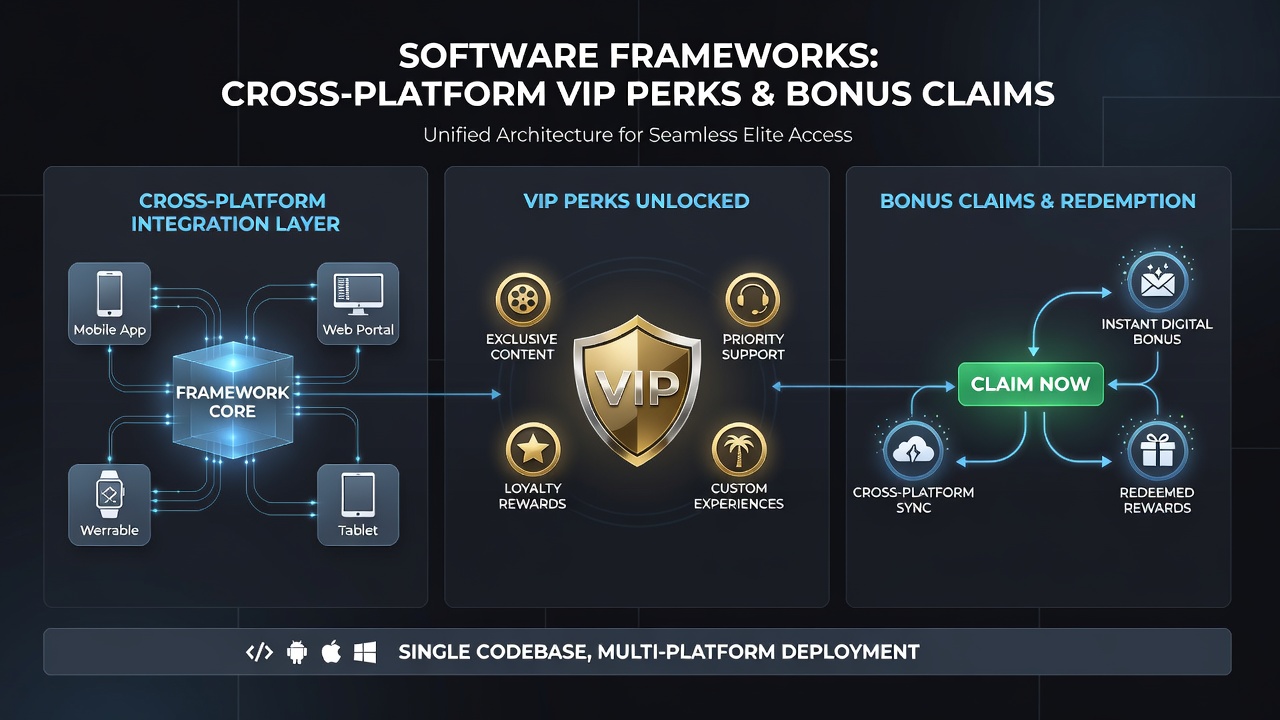
One major European operator adopted a Kotlin-based framework in early 2025 to unify its loyalty program, resulting in a 25 percent increase in cross-device bonus redemptions within six months according to internal metrics shared with industry analysts. The system automatically recognizes when a player reaches a new VIP level on mobile and applies corresponding perks on desktop without additional verification steps.
Another implementation in the Asia-Pacific region utilized Flutter to streamline bonus claim interfaces, which reduced support tickets related to platform-specific issues by nearly half. Researchers at academic institutions studying digital entertainment ecosystems have documented similar patterns where framework adoption correlates with higher retention rates among multi-device users.
Regulatory and Security Considerations
Frameworks must incorporate audit trails that satisfy oversight from organizations like the European Gaming Regulators Association and similar bodies in Canada and Australia. These trails record every bonus claim and perk activation with timestamps and device identifiers, which supports transparent reporting during compliance reviews.
Security protocols embedded in modern frameworks include multi-factor authentication and behavioral biometrics that function consistently across operating systems. This consistency prevents unauthorized access to VIP accounts while allowing legitimate players to claim offers from any location.
Future Developments Expected by Late 2026
Emerging updates to existing frameworks focus on enhanced AI integration for personalized reward distribution and improved offline caching for regions with variable connectivity. Industry reports project that these advancements will further reduce latency in cross-platform perk synchronization, maintaining continuous access for users who frequently switch between devices.
Conclusion
Software frameworks continue to reshape how gaming platforms manage VIP perks and bonus claims by providing the technical infrastructure for seamless, device-agnostic experiences. Through unified data handling, automated engines, and compliant security measures, these systems support reliable reward delivery that aligns with player activity across all channels. Ongoing refinements in architecture point toward even tighter integration in the coming years.