Inside the Mechanics: How Software Developers Integrate Free Spins with Mobile Live Dealer Sessions
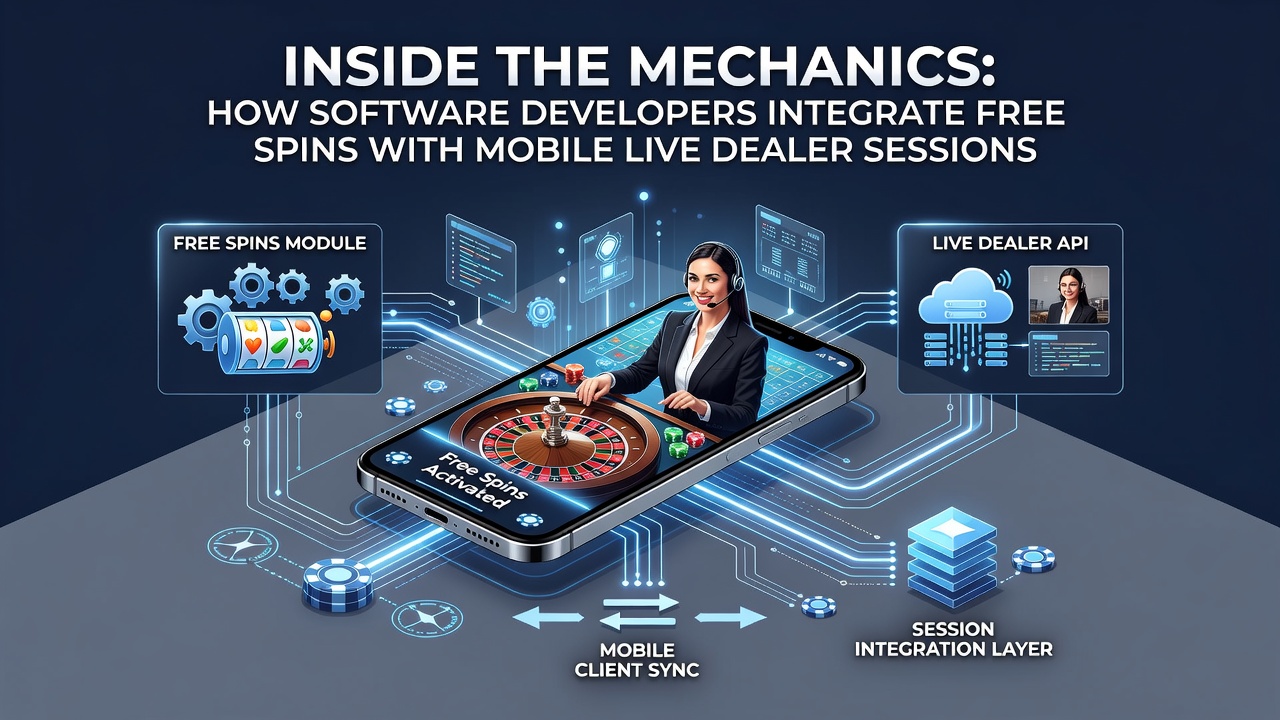 Developers build these systems by connecting bonus engines directly to live streaming servers and mobile applications so that free spins activate within ongoing dealer sessions without interrupting the real-time video feed or player interface. The process starts with API frameworks that allow bonus triggers to communicate with both the random number generator for spin outcomes and the live dealer management software for session continuity. Data packets flow between the casino's backend and the mobile client using secure WebSocket connections that maintain synchronization across variable network conditions common on cellular networks. Core components include a bonus orchestration layer that monitors player eligibility in real time, a mobile-optimized rendering module that overlays spin animations onto the dealer video stream, and compliance hooks that log every transaction for regulatory review. Engineers configure these elements through modular codebases where each service handles a discrete function such as authentication, balance updates, or outcome validation. When a player qualifies for free spins during a live blackjack or roulette session the system pauses the standard betting cycle only long enough to execute the spins then resumes the dealer interaction seamlessly.
Backend Architecture and Real-Time Data Handling
Teams rely on microservices architectures that separate the free spins logic from the primary game engine while still allowing bidirectional data exchange. A central message broker routes events such as spin completion or bonus depletion between services hosted across cloud regions chosen for low latency to mobile users. Developers implement state machines that track whether a player remains in a live session or has switched to a bonus mode so that the dealer feed continues uninterrupted on the device screen.
Database schemas store temporary session tokens that link the free spins allocation to the specific live table and mobile device identifier. These tokens expire after use or after a defined timeout period to prevent reuse across disconnected sessions. As of June 2026 several platforms have adopted edge computing nodes that cache spin results closer to the user which reduces round-trip times during high-traffic periods.
Mobile Client Integration and User Interface Design
On the device side developers embed the free spins feature inside the same application container that manages live video decoding and touch input handling. The interface uses layered views where the dealer stream occupies the primary layer while spin reels or wheels render in a transparent overlay that respects the device's orientation and screen size. Gesture controls remain active throughout so players can adjust bets or chat with the dealer even while spins execute automatically.
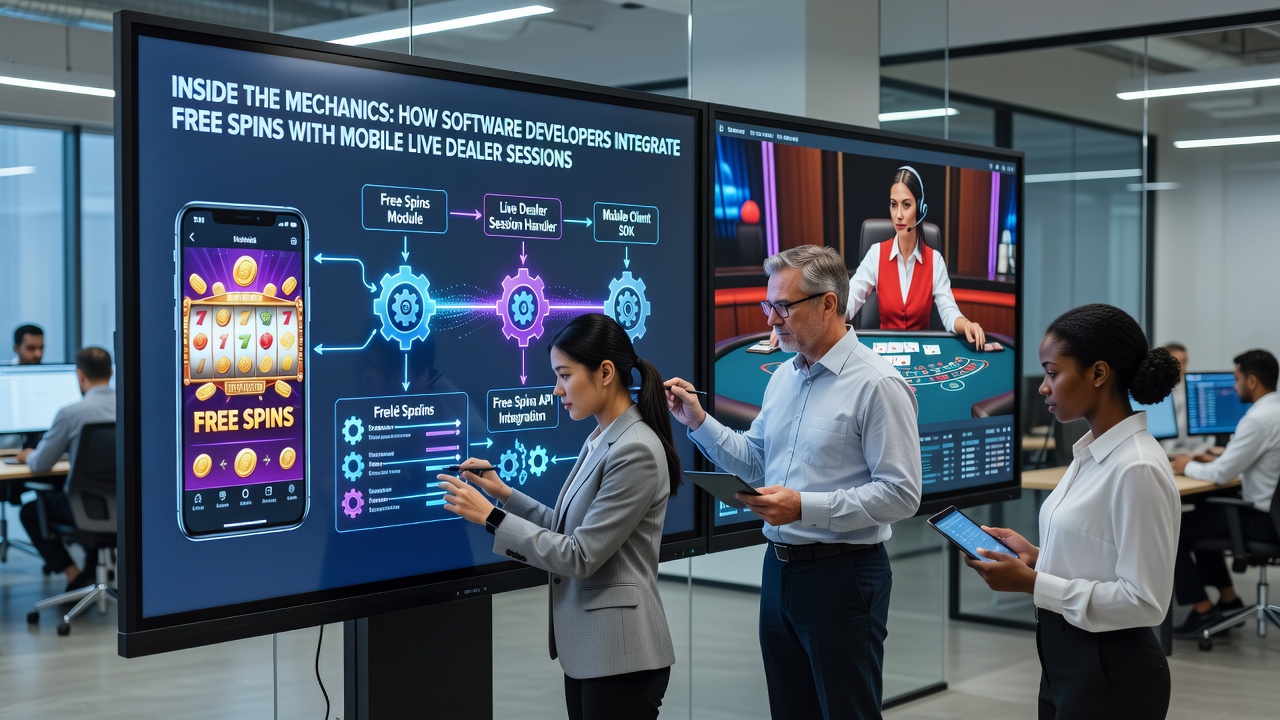 Testing protocols simulate network jitter and packet loss to verify that the overlay does not desync from the live dealer actions. Engineers employ automated test suites that replay thousands of session scenarios against both iOS and Android builds to catch edge cases before release. Accessibility features such as voice-over support for spin results integrate at the same layer as the bonus display to maintain consistent user experience across all features.
Security Protocols and Regulatory Compliance
Encryption standards cover every data exchange between the mobile app, the bonus server, and the live dealer platform. Developers apply token-based authentication that rotates keys frequently while preserving session state across reconnections. Audit trails capture timestamps, player identifiers, spin outcomes, and dealer table references so that external reviewers can reconstruct any sequence of events.
According to guidelines published by the Malta Gaming Authority, all bonus mechanics must undergo independent testing before deployment to confirm fairness and accurate payout calculations. Similar requirements appear in frameworks issued by the New Jersey Division of Gaming Enforcement which emphasize real-time monitoring of integrated features like free spins within live environments. Industry reports from the European Gaming and Betting Association highlight the growing use of standardized APIs that allow third-party auditors to verify integration points without accessing proprietary source code.
Performance Optimization and Scalability Considerations
Load balancing distributes incoming session requests across multiple instances of the live dealer and bonus engines to handle simultaneous mobile connections. Developers profile CPU and memory usage during peak hours to identify bottlenecks in the rendering pipeline when both video decoding and spin animations run concurrently. Caching strategies store frequently accessed bonus rules locally on the device to reduce server calls while still validating final outcomes against the authoritative backend.
Updates to integration code deploy through phased rollouts that monitor error rates and user retention metrics before expanding to larger audiences. Continuous integration pipelines run regression tests that specifically target the interaction between free spins and live dealer modules to prevent regressions after each code change.
Conclusion
The integration of free spins into mobile live dealer sessions relies on coordinated efforts across backend services, mobile clients, and compliance layers that together deliver uninterrupted gameplay. Data flows remain synchronized through established protocols while security measures protect every transaction. Observers note that continued refinement of these systems supports expanding mobile participation in live casino environments as device capabilities and network infrastructure evolve.